Todd Burleson
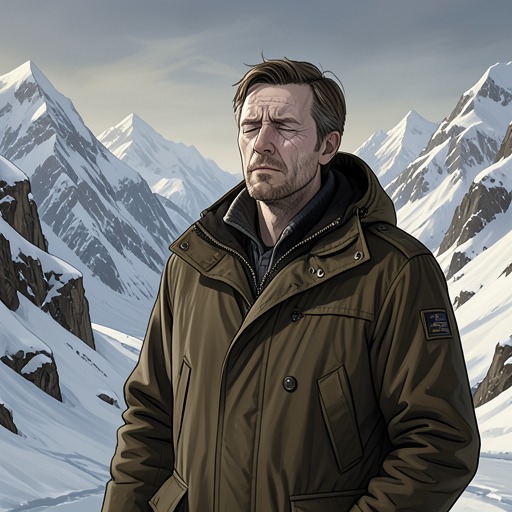
The ClimbTodd Burleson is a professional mountain guide whose actions during the 1996 Everest disaster are recorded both in the immediate aftermath and in the later recognition of those who helped save climbers. He assisted in the evacuation of Beck Weathers and Makalu Gau and, with Pete Athans, received the David A. Sowles Memorial Award for his work on Everest.
Rescue and the Descent
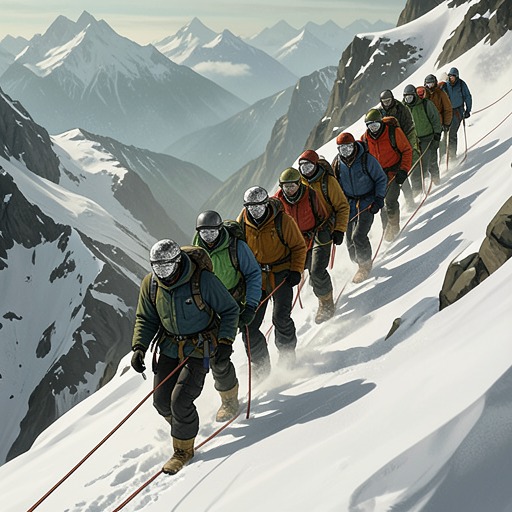
By the morning of May 12, hope for Rob Hall, Doug Hansen, and Andy Harris had been abandoned, and the remaining Adventure Consultants climbers were descending toward Base Camp. Weathers and Gau were evacuated to Camp I, where a helicopter could land and carry them to Kathmandu. Burleson was among those whose efforts made that evacuation possible, alongside Athans, Ed Viesturs, David Breashears, and members of other expeditions. The account names him as part of a collective rescue effort rather than isolating his contribution from the work of the wider climbing community.
The evacuation formed part of a larger retreat from the mountain. As the Hall team descended, Neal Beidleman and the Mountain Madness clients reached Base Camp, planning to rest and recover before trekking to Syangboche for a helicopter flight to Kathmandu. Anatoli Boukreev, meanwhile, gathered what expedition gear he could and descended separately, arriving on the evening of May 13. The rescue of Weathers and Gau thus belonged to a difficult aftermath in which evacuation, recovery, and the descent of surviving teams unfolded alongside the loss of climbers who could not be brought down.
Recognition for the Everest Rescue
On December 6, 1997, Burleson and Athans were named with Boukreev as recipients of the American Alpine Club’s David A. Sowles Memorial Award. At the club’s annual meeting in Bellevue, Jim Wickwire announced that all three were being honored for their actions on Everest in May 1996. Wickwire emphasized that the recipients were professional mountain guides and had therefore been held to an especially high standard for the rare award.
The recognition placed Burleson’s rescue work within a public judgment about professional responsibility. The award did not erase the controversy surrounding the disaster or imply that every disputed decision had been settled; it marked the committee’s assessment of the recipients’ actions. In the later account of the committee’s deliberations, Wickwire said it had considered the information readily available, including Boukreev’s decision not to use oxygen and his quick descent ahead of the Mountain Madness clients, yet still found him deserving. Burleson’s inclusion among the honorees links his recorded rescue role to this broader evaluation of guide conduct and heroism.
Place in the Book’s Account
Burleson receives comparatively concise treatment: the book identifies him through a concrete rescue consequence and a later institutional honor, rather than supplying an extended biography or account of his decisions during the storm. Those two appearances nevertheless give his role a clear shape. First, he is part of the practical effort that gets two severely endangered climbers off the mountain; later, the American Alpine Club formally recognizes his actions alongside those of other guides.
That progression—from evacuation to award—also shows how the disaster’s aftermath was not only a matter of descent and mourning but of assessing what professional service meant under extreme conditions. Burleson’s significance in the available account lies in the connection between direct rescue work and its subsequent recognition, while the collective phrasing preserves the fact that the evacuation depended on several people and teams working together.